The Fixed-Position Player Is a Myth
A fixed-position player is a myth: learn how football roles shift between phases, so you can read a player’s duties and the cover behind their movement.
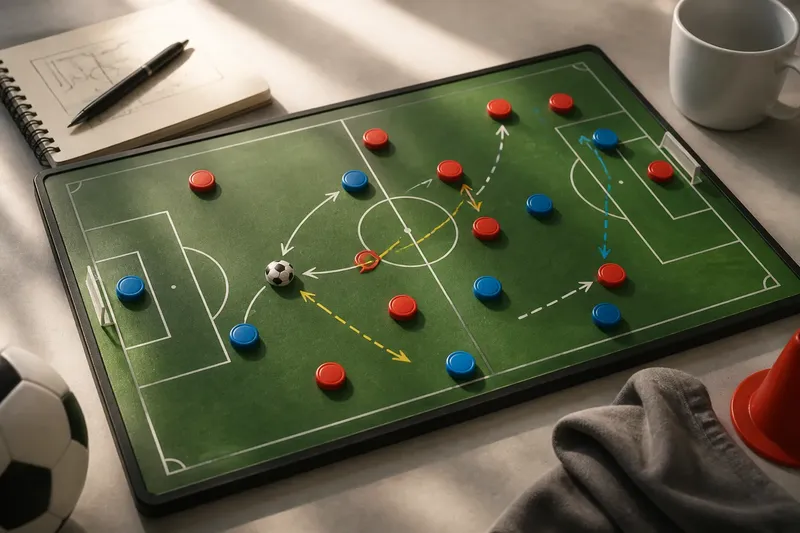
A fixed-position player is a myth: in football, a team sheet shows where someone is expected to start, not every duty they will perform. Follow a left-back through one attack and you may see them move inside to support possession, then recover towards the touchline when the ball is lost.
What does a football position label tell you?
Position names such as centre-back, winger and full-back give spectators a shared starting point. They suggest a player’s usual area and broad responsibilities, but do not describe each decision during a match.
It helps to separate position from role. A position describes a place in the team’s basic arrangement; a role describes the work expected in a particular situation. A left-back can keep that position on the team sheet while moving into midfield during an attack or covering a teammate’s forward run.
The distinction is useful because footballers often change their tasks without changing their starting position. Think of a position as a home address: it tells you where someone is based, not every place they go during the day.
Why do football duties shift between phases?
A team’s needs change with possession. When it has the ball, players may spread out to create passing options; after losing it, they may press an opponent, retreat towards their own goal or protect a space while a teammate challenges.
A centre-forward might drop towards midfield to connect passes, leaving a winger to threaten the space near goal. A full-back might advance to provide width, then recover if the opposition attacks the channel behind them. These movements can be planned parts of the player’s role rather than permanent position changes.
The shape of the opposition, the ball’s location and a coach’s instructions can all affect which duties are needed. Changes in formation, substitutions or a teammate’s movement may also require players to cover different areas.
How can you read a football player’s changing role?
First, note the team’s basic shape when it has settled into possession. Identify the defenders, the players offering options between lines and those staying high. This gives you a reference point for noticing a meaningful pattern instead of treating every run as a new position.
Then follow one player through a complete sequence: what they do while their team has the ball, where they move when possession is lost, and how they respond when it is won again. Watch the teammates too. If a player leaves an area, someone may move across to protect it.
Say a left-back starts beside two centre-backs, and the team’s right winger stays wide during an attack. The left-back moves into midfield to offer a passing option; after a turnover, they run back towards the left touchline while a midfielder covers the centre. The starting position remains the same, but the player’s tasks and the team’s cover have changed.
What should you check during each phase?
- Before the ball arrives: Check whether the player is offering a passing angle. If they are, watch who receives the next option; if not, look for whether they are holding a defender away from the ball.
- During possession: Check whether the player carries the ball, supports nearby or stays wide. If they move forward, see whether a teammate covers behind; if nobody does, the team may be leaving space open.
- When possession is lost: Check whether the player presses, tracks a runner or retreats. If an opponent is nearby, pressing may delay the attack; if the route forward is open, retreating or blocking the lane may be the response.
- After a teammate challenges: Check who protects the space behind that player. If another defender covers it, the challenge may be part of a coordinated exchange; if not, the team may be exposed to a pass into that space.
- At a restart: Check whether players return to their usual shape or take up special positions for a corner, throw-in or free kick. If the arrangement changes, compare it with the team’s open-play shape before deciding whether the change lasts.
- Across repeated attacks: Check whether the same movement happens in similar situations. If it recurs and teammates adjust around it, it may be an established instruction; if it happens once, treat it as a response to that moment.
These checks help explain what a movement appears to enable; they do not reveal a coach’s instructions with certainty. A player’s task may involve a deliberate trade-off, such as advancing to create width while a teammate protects the space behind.
Which football labels can mislead you?
A team sheet or broadcast graphic can make a role look more fixed than it is. A winger may move centrally to create room for an overlapping full-back, who then provides the width usually associated with the winger.
Labels can also hide different duties within one position. One midfielder may stay in front of the defence while another makes forward runs. Players with different labels may, in turn, perform similar work when the team defends deep.
Do not assume a player has changed position after one unusual run. A brief movement may answer a nearby opponent or a teammate’s run. A repeated, lasting change in the team’s arrangement is stronger evidence of a tactical adjustment.
Why does a player’s job depend on teammates?
Football responsibilities are shared. A player can advance because a teammate covers behind, or a defender can step forward to challenge because another player guards the space they leave. Following only the most visible player can make a coordinated exchange look like an individual choice.
Players with the same position label may also have different responsibilities because of their strengths or the team’s plan. One full-back may be asked to advance often while the other stays deeper. The label identifies a starting point; teammates’ movements help explain how the work is divided.
What questions help explain a footballer’s changing role?
Does a player change position whenever they move?
No. A player can leave their usual area briefly to support an attack or cover a gap, then return to the team’s shape. Look for a lasting change in the arrangement before calling it a position switch.
Why might a forward defend near their own goal?
The team may need the forward to track an opponent or help protect space. That defensive duty can be temporary and still fit the player’s broader attacking role.
Can two players in the same position have different jobs?
Yes. One full-back may advance while the other stays deeper, depending on the team’s plan and the space available. The shared label does not require identical movement.
How can you tell whether a role change is deliberate?
Look for the same movement in similar situations and check whether teammates adjust around it. A single unusual run may be situational; a recurring pattern is stronger evidence of an established role.
How should you follow a player during a match?
Choose one footballer and follow their work through the whole possession cycle, not only when they touch the ball. Note where they start, what they do with and without possession, and who takes over the space they leave.
A position label is useful because it gives you a reference point, but the player’s duties are clearer when you watch the surrounding structure. On your next viewing, follow the teammate who covers the space as carefully as the player who leaves it; that exchange often explains why the movement works.