Why a Basketball Screen Creates a Second Decision
A basketball screen forces defenders to choose a route. Learn to read that choice and spot whether the handler should shoot, drive, pass or reset.
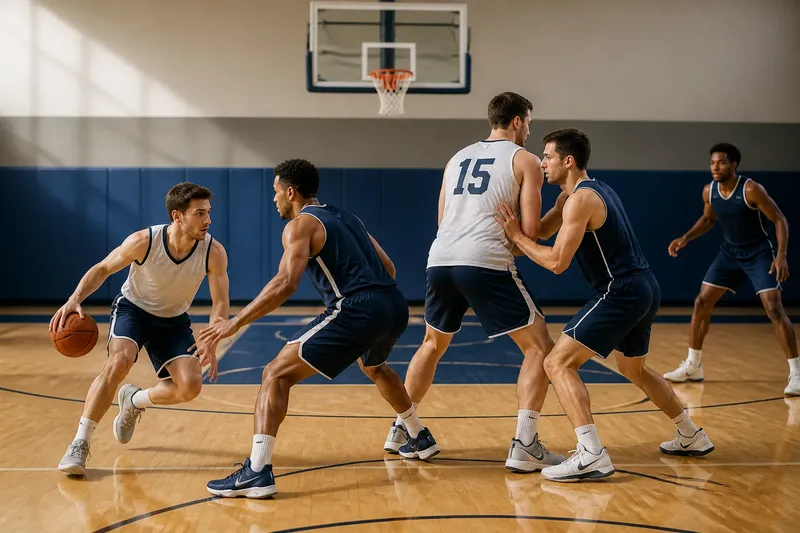
A basketball screen forces defenders to choose how to cover the ball handler, and that choice can open a route or change the matchup. Watch the defender’s movement as the handler reaches the screener: it often reveals more than the screen itself.
A screen, also called a pick, is a legal position set by an attacking player to impede a defender’s path. The handler can use it as a turning point or move away from it. Its value is that defenders cannot cover every route at once, so their response gives the handler new information.
What do defenders do when they meet a screen?
The on-ball defender may go over the screen, go underneath it, switch assignments with the screener’s defender, or rely on a teammate to help. Each response changes the space available to the handler. Watch where the defenders end up, not just where they start.
Imagine a handler approaching a screen near the top of the key, with the screener’s feet set and a teammate in the corner. If the defender goes under, the handler may have room to shoot or continue towards the middle. If the defender chases over, the handler may turn tightly around the screener and attack before the defender recovers. Neither outcome is automatic: the handler’s skill, screen position and help defence all matter.
A screen is like a doorway: it makes the defender choose which side to pass, but does not decide where anyone ends up. That brief change of route gives the handler time to read the defence before choosing a shot, drive, pass or reset.
How does each defensive response change the play?
Read the defenders’ actual movement rather than assuming the planned play will work. The clues are visible: the on-ball defender’s route, the distance to the handler and whether another defender leaves an opponent to help.
Going over
The defender follows the handler around the outside edge of the screener, usually taking the longer route. This can prevent an uncontested shot, but may leave the defender trailing as the handler turns the corner.
If the handler gets a shoulder ahead of the defender, a drive or pull-up shot may be available. If the defender stays close and another defender is waiting, a pass or reset may be safer than forcing the lane.
Going under
The defender takes the shorter route between the screener and the basket instead of following around the outside. This can make sense when the screen is far from the basket or the defence is prepared to give the handler room to shoot.
Look at the space between handler and defender as they emerge. A clear pocket may invite a shot; the handler can also keep the dribble and wait for the defender to close. Going under trades immediate pressure for a shorter route back into position.
Switching or helping
On a switch, the screener’s defender takes the handler while the original on-ball defender stays with the screener. The handler may face a different size or movement style, and the screener may find a new opponent to seal off or move away from.
With help defence, a teammate steps towards the handler while the original defender recovers. If the helper commits, a pass to the opponent they leave may be available. If the helper only shows briefly and returns, the handler may be able to keep the ball and continue.
What should the handler read before choosing?
Check three things: whether the on-ball defender is close enough to contest a shot, whether a helper has entered the driving lane, and whether a teammate has been left open. The handler can drive if there is a route past the defender, shoot if there is room and the shot suits them, or pass if help has left a teammate available.
Keeping the dribble alive can preserve those options briefly. If the defence blocks the intended route and the screener is not available, moving away from the screen may be better than forcing a crowded play. The screener can then move towards the basket or away from the ball to offer another target.
Spacing shapes these reads. Teammates standing too close to the screen can crowd the handler’s route, while players spread across the court may give a helper more distance to cover on the way back. The defence can still rotate, so an apparent opening is a cue to assess rather than a promise of a clear pass.
What should you look for in one screen?
Where is the screen set?
A screen near the sideline leaves the handler fewer directions to escape; one nearer the middle can leave both sides in play. Note the location before the handler arrives, then watch which route the defence tries to close.
Which defender moves first?
Track whether the on-ball defender goes around, underneath or away to exchange assignments. Then check whether a second defender steps towards the ball, since that shows whether the handler is facing an isolated matchup or help.
Who becomes available?
Look for the player whose defender leaves to help. That may be the screener, a perimeter teammate or someone cutting towards the basket; check whether the handler has a direct passing lane or needs to move the defence first.
When should the handler move away?
If defenders close the intended route and the screener is not available, the handler can keep the dribble and move away instead of forcing a play. The screener may reposition for another angle, giving the offence a fresh chance to make the defence choose.
How can you follow the choice from start to finish?
Say you are watching an invented play: a handler approaches a screen at the top of the key, the on-ball defender goes under, and the screener’s defender steps into the lane. The handler sees space for a shot but also sees that the helper has left the screener near the basket. They keep the dribble, draw the helper a little further towards the ball, then pass to the screener; the expected observable result is a receiving opportunity near the basket, though the pass can still be contested or the defence can recover.
For a beginner watching a game, start with the on-ball defender’s route: over, under, switch or help. Then look at the space that response leaves behind. A basketball screen creates a second decision for the defence, but the handler benefits only by recognising the response and choosing an action that fits it.
Follow one screen from the moment the defender meets it until the ball leaves the handler’s hands. That short sequence connects the defensive choice to the handler’s next action, even when the play does not end in a score.